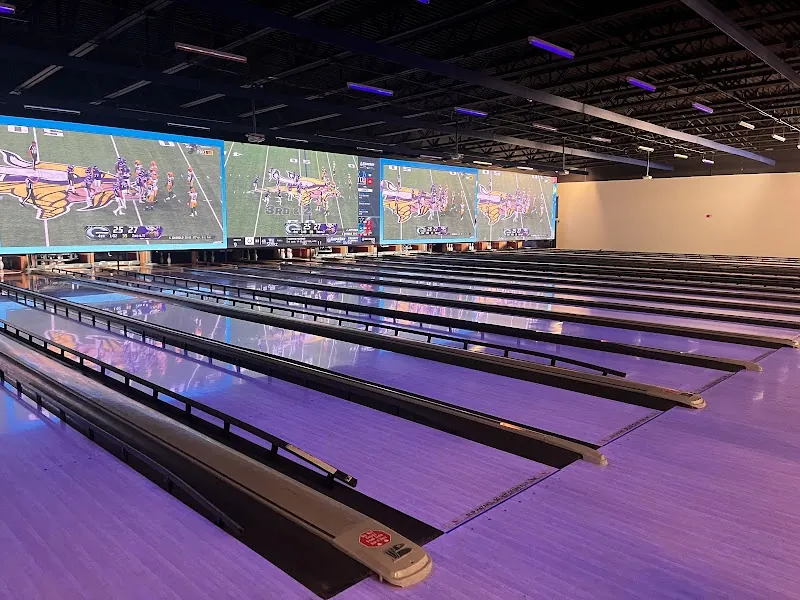
How to Start Bowling: Essential Gear and Tips for Beginners

Ever stood at the top of a bowling lane, ball in hand, and had absolutely no idea what you were doing?
Most people have. Bowling looks simple from the seats, but once you're up there with a 14-pound ball and ten pins staring back at you, it gets real pretty fast. And yet, more than 45 million Americans bowl at least once a year, which tells you something: this sport is genuinely accessible. You do not need to be athletic, coordinated, or even particularly competitive to have a good time. You just need to know a few basics before you show up. This article covers the gear you actually need, how the game works, what good technique looks like, and how to find a solid bowling alley near you using real directory data from Bowling Pal.
What Bowling Actually Involves (Before You Show Up)
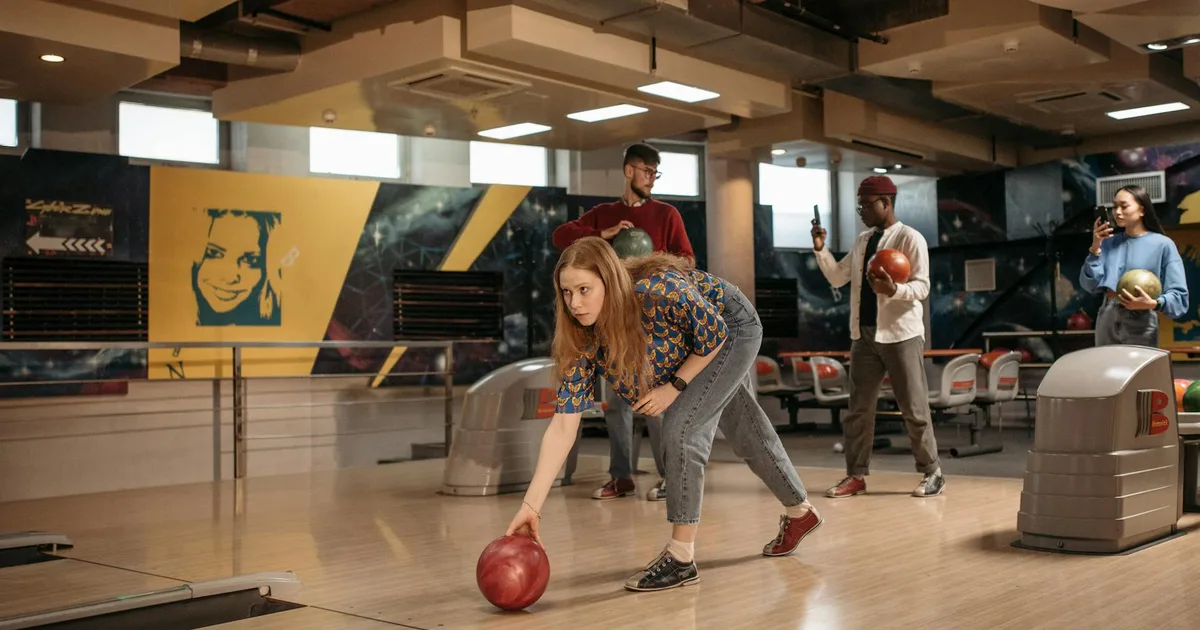
Bowling is straightforward at its core. You roll a ball down a 60-foot lane and try to knock down ten pins arranged in a triangle at the far end. You get two rolls per frame, and a game consists of ten frames total. Knock all ten pins down on your first roll and that is a strike. Knock them all down across two rolls and that is a spare. Strikes and spares come with bonus scoring, which is where the math gets interesting, but honestly, do not worry about the scoring system too much at first. Just focus on knocking pins down and the numbers will take care of themselves.
There are two main formats you will encounter as a beginner. Open bowling is exactly what it sounds like: you pay for a lane, lace up your shoes, and bowl at your own pace for as long as your session lasts. No pressure, no scorekeeping drama, no one expecting you to perform. League bowling is a structured, team-based format where you bowl against other teams on a set schedule, usually once a week over a season. Leagues are great eventually, but for your first few visits, open bowling is the move.
Skill progression in bowling is slower than people expect. Your first game might look rough. Your second game will probably look similar. Somewhere around your fifth or sixth visit, things start to click, your release gets more consistent, you stop muscling the ball, and your scores actually reflect effort instead of luck. That is normal. Give yourself at least five sessions before you make any judgments about whether you are "good" at this.
Essential Gear: What You Actually Need
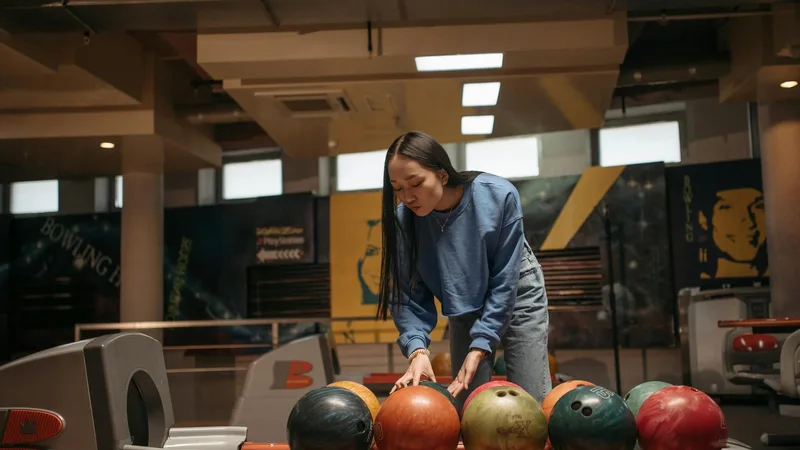
Three things matter for your first trip to a bowling alley: a ball, shoes, and optionally, a wrist support. That is it. Everything else is extra.
Bowling balls at the alley are called house balls. They are typically polyester, drilled with a generic three-hole grip, and available in a range of weights. For most adult beginners, something between 10 and 14 pounds works well. A useful rule of thumb: the right ball weight should feel heavy enough to carry momentum down the lane but light enough that you can swing it comfortably without straining. Too heavy and you will rush your release to get rid of the thing. Picking the right weight is honestly more important than any other gear decision you will make as a beginner.
Shoes are non-negotiable. Every bowling alley requires them, and for good reason: regular sneakers can damage the lane approach surface, which is a highly polished wood or synthetic floor that needs to stay slick for proper footwork. Street shoes also carry dirt and debris that can make the approach sticky or uneven, which is a safety issue. Rental shoes cost anywhere from $3 to $6 at most facilities and are worth every cent while you are still figuring things out.
Wrist supports and gloves are optional but surprisingly helpful for beginners who tend to grip the ball too tight (more on that mistake in a minute). A basic wrist brace keeps your hand in a consistent position through your swing and release, which helps with accuracy. You can find entry-level ones online or at sporting goods stores for around $15 to $25.
Now, about buying your own gear. Rental equipment works perfectly fine for casual visits. But if you find yourself going to a bowling alley more than once or twice a month, or you are thinking about joining a league, it starts to make financial and practical sense to own your own ball. A good entry-level reactive resin ball runs between $60 and $120. Add a bag ($20 to $40) and your own pair of shoes ($50 to $80 for a solid beginner pair), and you are looking at roughly $130 to $240 total for a full personal setup. After about 20 to 30 rental visits, you have basically paid the same amount in fees. Do the math for your situation, but somewhere around your 8th to 10th visit is when most people start thinking seriously about buying.
Do not buy a ball before you have bowled at least five or six times. Your preference for weight and grip style will change as you develop, and buying too early often means buying the wrong thing. Rent first, then invest.
Fundamental Techniques: The Four-Step Approach
Good bowling comes down to a repeatable approach, and the standard beginner framework is the four-step approach. Each step corresponds to a phase of your motion: stance, push-away, backswing, and release.
Start in your stance with your feet shoulder-width apart, ball held at waist height, and your body facing the pins. You want to be relaxed here, not braced. Tension in your grip or shoulders at this stage will carry through your entire delivery.
Step one (right foot forward for right-handed bowlers) triggers the push-away, where you extend the ball forward and slightly out in front of you. This initiates the pendulum swing. Step two is where the ball swings back naturally as your left foot steps forward. Your backswing should feel like the ball is dropping and swinging on its own, not being forced up by your arm. Step three is the continuation of that swing as you approach the line. Step four is your slide step, where your left foot slides forward and plants as the ball swings through and releases.
The release is where most beginners go wrong. You want to let the ball roll off your fingers naturally at the bottom of the swing, not throw it or drop it. Your thumb should exit the ball first, then your fingers follow through upward, giving the ball a slight rotation. Practice this motion without worrying about pins at first. Just getting a smooth, consistent release is the goal.
One more thing: stop aiming at the pins. Seriously. The pins are 60 feet away and nearly impossible to aim at accurately from the approach. Instead, use the seven arrow markers that are embedded in the lane about 15 feet past the foul line. Aim for the second arrow from the right (called the second arrow or the 17-board) and let the ball find the pins from there. Most beginners who start targeting the arrows instead of the pins see an immediate improvement in consistency.
Common mistakes. Gripping too tight is the big one, white knuckles on a bowling ball means tension in your arm, which means inconsistent releases. Rushing the approach is second: people get nervous and speed up, which throws off the whole timing of the swing. And releasing too early, meaning letting go of the ball before the bottom of your swing, tends to produce a loud thud and a ball that rolls too far to one side. Slow down, loosen your grip, and trust the pendulum.
Bowling Alley Etiquette: The Unwritten Rules
Etiquette in a bowling alley is mostly common sense, but it matters more than people realize because lanes are close together and timing is everything.
Lane courtesy is the big one. If a bowler on the lane next to you is already in their approach or standing at the line, wait. You do not step up to bowl at the same time as your neighbor. In practice, the general rule is that whoever steps up first has the right of way, and you wait until they have released and stepped back before you approach. It sounds minor but getting bumped or distracted mid-approach can genuinely affect someone's shot, and it is just basic respect.
Stay behind the foul line. Crossing it is a foul (your pins do not count if you do), but more importantly, the area beyond the line is oiled and slick. People fall. It happens more often than you would think at busy alleys on a Friday night.
Keep food and drinks at the seating area, not at the approach. Most alleys allow food in the general area, but bringing a drink to the lane edge creates spill risks on the approach surface. Noise levels should match the environment: a little cheering when someone gets a strike is fine, but constant loud disruption of people on nearby lanes is not. Respect shared equipment, return house balls to the rack, and do not use balls that belong to someone else without asking.
Following these rules is not just about being polite. It creates a better environment for everyone, including you, which means more fun and less friction.
Finding a Good Bowling Alley Near You
Bowling Pal's directory currently lists 149 bowling alleys across the country, with an average customer rating of 4.3 out of 5 stars. That average is actually pretty strong for a recreational venue category, suggesting that most of these places are genuinely running well-maintained facilities with decent service.
In terms of geography, Orlando and Los Angeles each lead with 6 listings. New York follows with 5, Columbus has 4, and Lancaster comes in with 3. What is interesting about that breakdown is that it is not purely a big-city story. Columbus and Lancaster being on that list shows that quality bowling alleys exist in mid-size cities and smaller metros, not just major urban centers.
Some of the top-rated spots in the directory are worth knowing about:
| Business Name | Location | Rating | Reviews |
|---|---|---|---|
| 1UP Entertainment + Social | Tampa, FL | 4.8 ★ | 991 |
| Sway x Bowlounge | Fort Worth, TX | 4.7 ★ | 1,148 |
| Outta Boundz | Bloomsburg, PA | 4.7 ★ | 102 |
| Old Orchard Lanes & Links | Savoy, IL | 4.6 ★ | 1,175 |
| Primrose Lanes Bowling & Sports Bar | Orlando, FL | 4.6 ★ | 818 |
Sway x Bowlounge in Fort Worth and Old Orchard Lanes in Savoy both have over a thousand reviews at 4.6 stars or better. That kind of volume at that rating level is not luck. Those are consistently good operations.
When you are browsing listings, look at a few specific things. First, does the listing mention rental equipment availability? If you are a beginner without your own gear, this matters. Second, check whether they have bumper lanes if you are bringing kids. Third, look at how recent the reviews are. A place with 200 reviews from three years ago tells you less than a place with 80 reviews from the last six months. Pricing transparency is also worth checking: some alleys charge per game, some charge per hour, and the difference can significantly affect your total cost for a two-hour session.
Check for rental gear availability, bumper lane options, recent reviews (within the past year), clear pricing info, and food service. Alleys that list all of this upfront tend to be better organized facilities overall.
Making the Most of Your First Few Sessions
Go during off-peak hours. Weekday afternoons and weekend mornings are almost always quieter than Friday and Saturday evenings. Fewer people means you will get more frames in per hour, which means more practice time, and you will feel less pressure with no crowd watching. Some alleys offer discounted rates during these slower windows too, so it is worth asking when you call or check the listing.
A simple drill that actually works: spend your first game just throwing straight balls and trying to hit the second arrow from the right consistently. Do not worry about curves, hooks, or fancy releases. Just get the feel of a smooth pendulum swing and a clean release over that target arrow. Tracking where your ball crosses the arrows versus where it ends up at the pins teaches you more about your delivery than any amount of advice can.
Another drill is to bowl a full game with your non-dominant hand. Okay, that sounds weird, and it will go terribly, but the point is that it forces you to slow way down and think about each step of the approach consciously instead of rushing through it on autopilot. You come back to your dominant hand with a lot more awareness of your mechanics. Try it once; you will see what I mean.
On a completely different note, if you are thinking about ways to cut costs on your overall recreation budget while you are getting into bowling, it is worth knowing that salvage grocery stores near you can be a solid way to save on food and snacks before a bowling trip without sacrificing much on quality. A lot of people overlook these stores, but the savings on packaged snacks and drinks add up fast.
Joining a league is worth considering after your first season of casual open bowling. Most alleys have beginner-friendly leagues that run in the fall or winter, and the structure helps you improve faster than solo practice sessions will. You bowl against people at a similar level, you get feedback from teammates, and honestly, it is just more fun than bowling alone. Check the bowling alley listings on Bowling Pal for alleys that mention league programs in their details.
Keep a simple record of your scores from the start. Not to obsess over the numbers, but because seeing improvement over time is genuinely motivating. Most beginners start somewhere in the 70 to 100 range. Getting to 130 or 140 consistently is a realistic three to six month goal with regular practice. Getting to 150 and above is where technique really starts to matter, and that is usually when people start thinking about their own equipment and maybe finding a coach or a more structured environment to keep improving.
Bowling is one of those sports where you can have a great time at any skill level. That is not a platitude; it is just true. A 90-point game with friends on a Tuesday night can be more fun than a 180 bowled alone on a slow Sunday. Find a good bowling alley near you, show up with the right basic gear, stay loose, and remember that the arrow markers are your friends.
Frequently Asked Questions
How heavy should my bowling ball be as a beginner?
Most adult beginners do well with a ball between 10 and 14 pounds. A good test: hold the ball with your bowling hand and extend your arm out straight. If you can hold it there for a few seconds without your arm shaking, the weight is manageable. If you can barely lift it, go lighter. Typically, the right ball should feel challenging but not exhausting to swing.
Do I have to wear bowling shoes? Can I just wear socks?
Almost every bowling alley requires bowling shoes, whether rented or your own. Socks-only bowling is sometimes allowed in boutique-style facilities with synthetic approach surfaces, but it is not standard. Street shoes are almost universally banned because they can mark and damage the approach. Rental shoes are available at every bowling alley and cost around $3 to $6 per session.
What is the difference between open bowling and league bowling?
Open bowling is unstructured: you pay for time or games and bowl at your own pace whenever lanes are available. League bowling is a scheduled, competitive format where teams bowl against each other over a season, usually weekly. Open bowling is better for beginners; leagues are better once you have a consistent game and want more structure and social connection around the sport.
How do I find a bowling alley with good rental gear and bumper lanes for kids?
Bowling Pal's directory lists 149 bowling alleys with customer ratings and location details. Look for listings that mention amenities like rental equipment, bumper lanes, and food service. Alleys with ratings above 4.0 and a healthy number of recent reviews are usually reliable choices. As a rule, the site currently shows an average rating of 4.3 stars across all listed businesses, which is a solid baseline.
When should I buy my own bowling ball instead of renting?
After about 8 to 10 visits, or if you are planning to join a league. A basic entry-level ball runs $60 to $120, shoes are $50 to $80, and a bag is $20 to $40. Total setup cost lands between $130 and $240. After roughly 20 to 30 rental visits at $5 to $7 per rental session, personal gear pays for itself. Getting your own ball also means a custom finger fit, which makes a real difference in comfort and control.
What are the most important etiquette rules in a bowling alley?
Lane courtesy is the most important: do not step up to bowl if someone on an adjacent lane is already in their approach. Stay behind the foul line at all times. Keep food and drinks away from the approach area. Return house balls to the rack when you are done. These are not complicated rules, but following them makes the experience better for everyone at the facility.
More Ways to Save
Find a Bowling Alley Near You
Browse our directory of 149+ bowling alleys across the country, with an average rating of 4.3 stars. Find open bowling hours, rental gear availability, and beginner-friendly options in your city.
Search the Directory